
Knowledge Paper 022 · Innovation
What Is the MAYA Principle?
Why the best ideas are surprising, but not too surprising.
The short answer
People like novelty.
But only up to a point.
Too ordinary, and they ignore it.
Too unfamiliar, and they reject it.
The sweet spot sits somewhere in the middle.
Industrial designer Raymond Loewy called this the MAYA Principle.
Most Advanced Yet Acceptable.
It is one of the simplest and most useful ideas in marketing.
Innovation works best when the new arrives carrying enough of the old to be understood.
Human beings are conservative innovators.
Evolution helps explain why.
Trying new things can be rewarding.
It can also be dangerous.
A new berry might be delicious.
Or poisonous.
A new path might lead to food.
Or a cliff.
Humans evolved to balance curiosity with caution.
Psychologists sometimes describe this as the tension between exploration and exploitation.
Should you explore something new?
Or stick with what already works?
The MAYA Principle sits just about in the middle.
Why radical innovation often fails.
Businesses often believe customers want disruption.
Usually they do not.
Customers want improvement.
That is different.
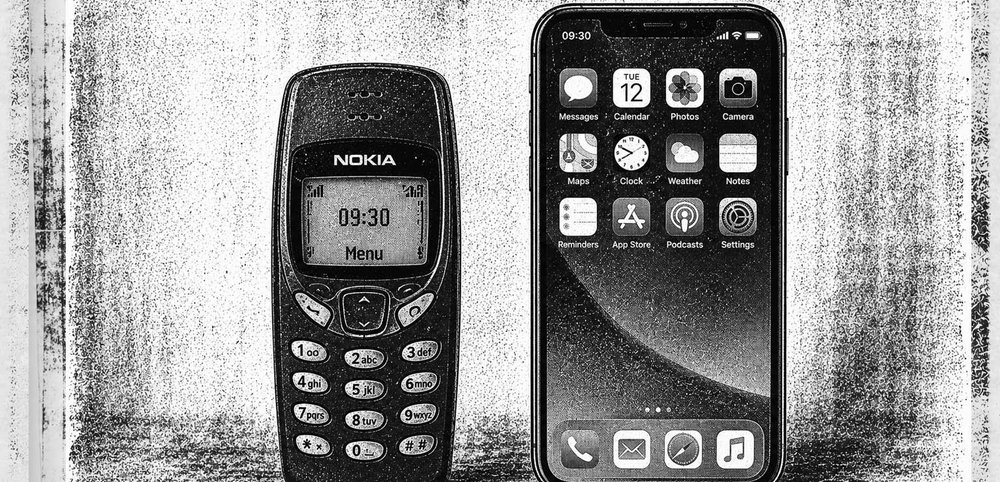
The first iPhone was revolutionary.
But it still looked like a phone.
Netflix still looked like television.
Spotify still looked like music.
Airbnb still looked like booking accommodation.
The technology changed.
The underlying behaviour felt familiar.
Every successful innovation carries something recognisable.
Electric cars still have steering wheels.
Smartwatches still look like watches.
Digital books still turn pages.
AI assistants still have conversations.
These are not accidents.
They are bridges.
They help people move from the familiar to the unfamiliar.
This applies to brands too.
The strongest brands rarely reinvent themselves overnight.
They evolve.
Coca-Cola changes.
But slowly.
LEGO introduces new products.
Without abandoning LEGO.
Punk rock was not entirely new.
It pilfered heavily from 60s garage rock.
Reggae borrowed from ska and calypso.
Grandmaster Flash nicked from Kraftwerk.
Fashion.
Politics.
You name it, innovation is always recombination.
The familiar provides the scaffolding for the new.
Why advertising works this way.
The same principle explains creative effectiveness.
An advert that looks exactly like every other advert gets ignored.
One that is completely incomprehensible gets skipped.
The best advertising surprises people without confusing them.
It is different enough to be noticed.
Familiar enough to be understood.
Why people do not really resist change.
Businesses often say customers resist change.
That is too crude.
People adopt new things constantly.
They adopt them when the benefits are clear.
When the behaviour is understandable.
When the new thing connects with something they already know.
People do not necessarily resist change.
They resist confusing change.
The innovation trap.
Inside a business, novelty can become a status competition.
Everyone wants to be seen as progressive.
Disruptive.
Original.
Future-facing.
That can encourage ideas designed to impress the meeting rather than help the customer.
The idea becomes advanced.
But no longer acceptable.
MAYA reminds us that innovation has to cross a psychological gap.
Not simply a technological one.
The SignalWorks connection.
The MAYA Principle connects several ideas from the Knowledge series.
Why Humans Copy Each Other
Innovation is usually recombination rather than creation from nothing.
What You Can Imagine Depends On What You Know
The more ideas you know, the more useful combinations become possible.
Chesterton’s Fence
Understand why something exists before replacing it.
MAYA is almost the positive version of Chesterton’s Fence.
Do not destroy the familiar.
Build from it.
How small businesses can use MAYA.
Small businesses often face a difficult choice.
Look too similar to everyone else, and you disappear.
Look too unusual, and customers may not understand what you offer.
MAYA gives you a practical test.
What can remain familiar?
What needs to feel new?
A restaurant might serve an unfamiliar ingredient in a familiar dish. Fusion food!
A financial service might introduce new technology through reassuringly conventional language.
A hotel might modernise the experience without stripping away the local character people came for.
A professional-services firm might challenge category conventions while keeping the buying process reassuringly clear.
The job is not to choose between familiar and new.
It is to combine them intelligently.
Common mistakes
Believing customers crave constant disruption.
Most people prefer intelligible improvement.
Mistaking novelty for innovation.
Different is not automatically better.
Copying the past exactly.
Too much familiarity becomes invisible.
Assuming people resist change.
People often resist confusing change, not change itself.
Removing every familiar cue.
Customers need bridges between what they know and what comes next.
Designing for insiders.
What feels obvious to the team may still feel alien to the customer.
The SignalWorks View
Businesses often ask:
“How different should we be?”
The better question is:
“Different compared with what?”
Successful innovation is rarely about abandoning the past.
It is about carrying enough of it into the future that people are willing to follow.
That is true of products.
Brands.
Advertising.
Technology.
Even culture itself.
The best ideas do not arrive from another planet.
They arrive looking just familiar enough to get invited in.
Key Takeaways
- The MAYA Principle stands for Most Advanced Yet Acceptable.
- People prefer innovations that balance novelty with familiarity.
- Evolution helps explain why humans are curious but cautious.
- Successful products preserve familiar cues while introducing new benefits.
- Great brands evolve rather than constantly reinvent themselves.
Frequently Asked Questions
Who invented the MAYA Principle?
Industrial designer Raymond Loewy developed the principle to describe people’s preference for products that feel as advanced as possible while remaining acceptable.
What does MAYA stand for?
Most Advanced Yet Acceptable.
Why does it matter in marketing?
Because people rarely adopt ideas that are completely ordinary or completely alien.
Does MAYA apply to advertising?
Yes.
Strong creative work combines familiarity with surprise. It attracts attention without losing comprehension.
Is the MAYA Principle connected to evolutionary psychology?
Yes.
Humans evolved to balance exploration with caution, making understandable innovation easier to accept than radical novelty without familiar cues.
Does MAYA mean businesses should avoid bold ideas?
No.
It means bold ideas need an accessible bridge. The goal is not to become less advanced, but to make advancement easier to adopt.
Further Reading
- Raymond Loewy — Never Leave Well Enough Alone
- Everett Rogers — Diffusion of Innovations
- Daniel Kahneman — Thinking, Fast and Slow
- Austin Kleon — Steal Like an Artist
- Steven Johnson — Where Good Ideas Come From
Related Knowledge
About The SignalWorks
At The SignalWorks, we help organisations create ideas that are distinctive enough to be noticed and familiar enough to be understood.
Because innovation does not succeed simply by being new.
It succeeds when people are ready to let it in.