
Knowledge Paper 008 · Cultural Evolution
Why People Copy Each Other
The evolutionary advantage that built civilisation.
The short answer
Humans copy because copying is usually smarter than starting from scratch.
Unlike most animals, we do not just inherit genes.
We inherit ideas.
- Language.
- Tools.
- Recipes.
- Beliefs.
- Technologies.
- Businesses.
- Brands.
Every generation starts where the last one finished.
That is why human progress compounds.
Your brain evolved to borrow.
Imagine two prehistoric humans.
One decides to eat an unfamiliar berry.
He dies.
The other watches.
She learns exactly the same lesson without taking the risk.
Evolution rewards the second strategy.
Social learning is astonishingly efficient.
It allows us to acquire useful knowledge without paying the full cost of discovery.
That matters because trial and error can be expensive.
Sometimes fatally expensive.
Copying is not intellectual laziness.
It is one of the great energy-saving devices of the human mind.
Culture is our second inheritance.
Genes transmit biology.
Culture transmits knowledge.
That distinction is one of the reasons humans became so unusual.
Many animals learn.
Some animals copy.
But humans copy at industrial scale.
We accumulate improvements across generations.
One person discovers something.
Another copies it.
A third improves it.
A fourth teaches it.
This process is known as cumulative cultural evolution.
It is how small discoveries become civilisation.
Memes are cultural genes.
Richard Dawkins coined the term meme to describe units of cultural transmission.
Long before the internet turned the word into pictures with captions, a meme meant any idea, behaviour or pattern that could spread from mind to mind.
A meme could be:
- a melody
- a joke
- a slogan
- a logo
- a dance
- a catchphrase
- a product ritual
- a way of speaking
Like genes, some memes survive.
Others disappear.
The best ideas are not always the truest.
They are often the easiest to remember, repeat and transmit.
Brands compete in exactly the same cultural environment.
Creativity is not the opposite of copying.
One of the biggest myths about creativity is that it means inventing something from nothing.
It rarely does.
Most creative breakthroughs are combinations of existing ideas.
Jazz recombined African rhythms with European harmony.
Hip-hop recombined soul, funk, turntables and street culture.
The smartphone recombined the phone, camera, internet browser, GPS and music player.
Even Shakespeare borrowed plots.
Creativity is less about immaculate originality than intelligent recombination.
Marketing is cultural evolution.
Brands are not simply competing for attention.
They are competing to become ideas that reproduce.
A brand grows stronger when its assets, phrases and behaviours are copied, repeated and recognised.
Think about famous brand ideas.
They rarely stay locked inside advertising.
They become language.
They become rituals.
They become reference points.
They become things people can repeat to each other.
That is why simplicity matters.
Complicated ideas are hard to copy.
Simple ideas travel.
People copy when the world is uncertain.
Copying becomes especially powerful when people are unsure.
Imagine choosing a new CRM system for a fast-growing business.
There are dozens of options.
Every website claims to be simple, powerful and trusted.
Reading every feature table would take days.
So you ask:
- What are other founders using?
- What does our finance team recommend?
- Which platform seems to be becoming the standard?
- Which one would make us look sensible if something went wrong?
You are not avoiding thought.
You are using other people’s behaviour as evidence.
Copying can be remarkably rational.
Mark Earls and the social customer.
This is where Mark Earls’ work is so useful.
In I’ll Have What She’s Having, Earls argues that marketers often overestimate individual decision-making and underestimate social copying.
We like to imagine customers as isolated decision-makers.
In reality, people constantly take cues from one another.
They observe.
They imitate.
They adjust.
They follow what appears to be working for others.
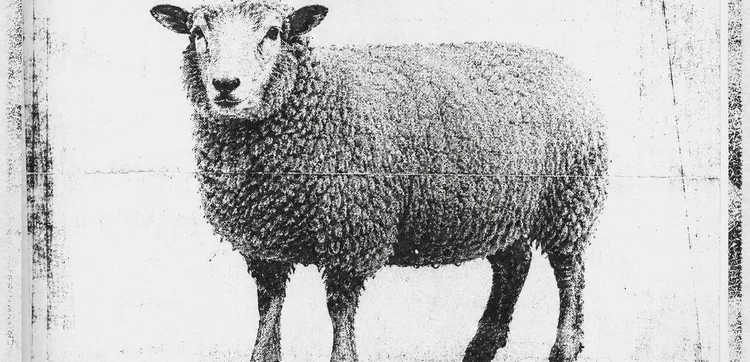
That does not make consumers sheep.
It makes them social animals.
Why this matters.
Marketing often assumes its job is to persuade individuals.
Sometimes its real job is to make adoption visible.
Popularity reduces uncertainty.
Visibility creates familiarity.
Familiarity encourages imitation.
This is why testimonials, case studies, customer logos, reviews and word of mouth are so powerful.
They do not simply provide information.
They demonstrate that copying your brand is a safe decision.
Common mistakes
Assuming people want originality.
Most people want to be different in acceptable ways.
They balance individuality with belonging.
Confusing novelty with usefulness.
Novel ideas that nobody understands rarely spread.
Successful ideas are usually familiar enough to recognise and different enough to notice.
Forgetting that brands spread socially.
Brands do not only travel through media.
They travel through people.
Treating word of mouth as an outcome.
Word of mouth is not simply what happens after marketing.
It is one of the mechanisms by which marketing works.
How marketers can use social copying.
Ask yourself:
- What would make this idea easier to repeat?
- What visible signals show that others already trust us?
- Which behaviours do we want customers to copy?
- What proof reduces uncertainty?
- What phrase, ritual or asset could travel beyond the campaign?
The aim is not to manipulate people.
It is to understand that buying decisions rarely happen in isolation.
People choose inside social worlds.
TheSignalWorks View
We celebrate originality.
Evolution celebrates transmission.
An idea that never spreads changes nothing.
The brands that grow are not necessarily those with the best ideas.
They are the ones whose ideas are easiest to remember, easiest to repeat and easiest to pass on.
Marketing is not simply communication.
It is cultural evolution in real time.
Key Takeaways
- Humans copy because social learning is faster, safer and cheaper than learning everything through trial and error.
- Culture acts as a second inheritance system, allowing knowledge to accumulate across generations.
- Memes are units of cultural transmission, not just internet jokes.
- Creativity is usually recombination rather than pure invention.
- Brands spread when they become easy for people to recognise, repeat and copy.
Frequently Asked Questions
Why do humans copy each other?
Humans copy because social learning reduces risk and saves effort. It allows people to benefit from the experience of others without having to learn everything for themselves.
Are memes only internet jokes?
No.
Richard Dawkins originally used the word meme to describe any idea, behaviour or cultural pattern that spreads from person to person.
Is creativity just copying?
Not exactly.
Creativity is usually copying, adapting and recombining existing ideas into new arrangements.
How does copying relate to marketing?
People often use the behaviour of others as evidence. Visible adoption, reviews, testimonials, customer logos and word of mouth all help reduce uncertainty.
Does social copying mean consumers are irrational?
No.
Copying can be highly rational when information is incomplete, risk is high or direct experience is expensive.
Further Reading
- Mark Earls — I’ll Have What She’s Having
- Richard Dawkins — The Selfish Gene
- Joseph Henrich — The Secret of Our Success
- Robert Boyd & Peter Richerson — Culture and the Evolutionary Process
- Austin Kleon — Steal Like an Artist
Related Knowledge
About TheSignalWorks
At TheSignalWorks, we use marketing science, behavioural psychology and evolutionary thinking to understand how brands grow inside real human societies.
Because customers rarely decide alone.
They watch, copy, adapt and pass ideas on.