
Knowledge Paper 015 · Strategy
What Is Chesterton’s Fence?
Why you should understand something before you change it.
The short answer
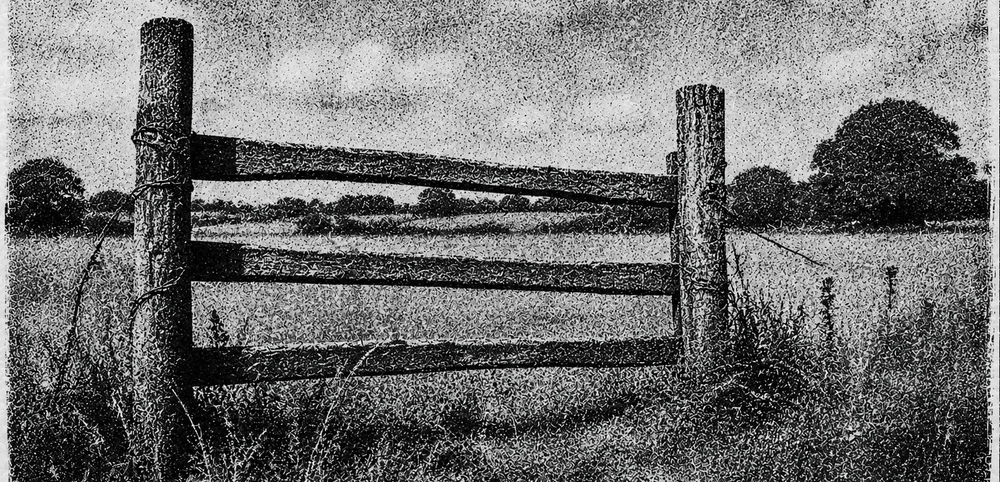
Imagine you are walking through a field.
In the middle stands an old wooden fence.
It looks pointless.
You cannot see what it protects.
So you decide to pull it down.
Chesterton’s response was simple.
Not so fast.
Before removing the fence, find out why someone built it.
Because if you do not understand its purpose, you probably should not be removing it.
Businesses pull down fences every day.
A new managing director arrives.
A consultant is hired.
A new team wants to make its mark.
Suddenly, everything old begins to look suspicious.
- Why do we still send printed invoices?
- Why do we answer the phone like that?
- Why is the packaging still brown paper?
- Why do we sponsor the local football team?
- Why do we keep using that old logo?
- Why do we still advertise in the local paper?
Sometimes the answer is simple.
Habit.
Laziness.
Fear.
In those cases, change may be overdue.
But sometimes the old thing is doing work nobody has bothered to understand.
Marketing is full of invisible fences.
Imagine a small family bakery.
For thirty years, it has used plain brown paper bags.
A consultant arrives and says:
“These look old-fashioned.”
So the bakery replaces them with glossy white bags.
Cleaner.
Sharper.
More modern.
And somehow less loved.
Because the brown paper was not just packaging.
It was signalling:
- fresh
- local
- handmade
- unpretentious
- proper bakery
The bag was not carrying bread.
It was carrying meaning.
Evolution is conservative for a reason.
From an evolutionary perspective, Chesterton’s Fence makes immediate sense.
Natural selection does not keep things because they are fashionable.
It keeps things because, at some point, they solved a problem.
That does not mean every old thing is good.
Appendixes exist.
Wisdom teeth exist.
Bad habits exist.
But it does mean inherited structures often have histories.
Before changing the thing, understand the environment that produced it.
Old solutions can become bad solutions.
But not everything old is obsolete.
AI has a Chesterton problem.
AI is very good at suggesting changes.
Shorter copy.
Cleaner layouts.
New headlines.
Sharper positioning.
Different colours.
But AI often cannot know why something exists.
It may not know that the awkward phrase is the one customers repeat.
It may not know that the “ugly” pack is the one people recognise.
It may not know that the unfashionable channel is where trust is built.
This is why judgement matters.
AI can help generate options.
Humans still need to understand the fences.
The redesign trap.
Every agency has seen it.
A new CEO arrives.
The brand is refreshed.
The logo changes.
The colours change.
The line changes.
The website changes.
Six months later, something feels wrong.
The business has not modernised.
It has erased memory.
Distinctive Brand Assets often look boring to insiders precisely because they have become familiar.
That familiarity may be the point.
Why this matters for small businesses.
Small businesses are especially vulnerable to invisible fences.
So much knowledge lives in the founder’s head.
Why the shop smells of coffee in the morning.
Why regulars are greeted by name.
Why invoices are handwritten.
Why the same van has been parked outside for years.
Why the business supports the village gala.
These things can look inefficient.
But some of them are trust mechanisms.
Some are memory structures.
Some are social signals.
Some are the reasons customers come back.
Why this does not mean “never change”.
Chesterton’s Fence is not an argument for nostalgia.
It is not a defence of “we have always done it this way.”
It is an argument for intelligent change.
Some fences should absolutely come down.
Some processes are wasteful.
Some traditions are exclusionary.
Some assets are weak.
Some habits are simply habits.
But the order matters.
Understand first.
Then change.
Common mistakes
Changing for the sake of change.
New is not automatically better.
Sometimes new is just less familiar.
Mistaking familiarity for boredom.
Insiders get bored long before customers do.
That does not mean the market has moved on.
Removing friction that builds trust.
Not every inefficient detail is bad.
Some slow, human moments make businesses feel safer.
Assuming old means obsolete.
Some old things remain because they still work.
Letting AI tidy away meaning.
Clean, generic and optimised can sometimes mean stripped of memory.
TheSignalWorks View
Every business contains invisible fences.
Rituals.
Habits.
Processes.
Traditions.
Distinctive assets.
Some should disappear immediately.
Others are still doing important work.
Strategy is not just knowing what to change.
It is knowing what not to.
Key Takeaways
- Chesterton’s Fence means understanding why something exists before removing it.
- Old business habits may be wasteful, but they may also carry memory, trust or meaning.
- Small businesses often contain invisible strategic assets that outsiders miss.
- AI can suggest changes, but human judgement is needed to understand context.
- Good strategy balances respect for inherited knowledge with the courage to improve it.
Frequently Asked Questions
What is Chesterton’s Fence?
Chesterton’s Fence is the idea that you should not remove or change something until you understand why it was created in the first place.
Does Chesterton’s Fence mean never changing anything?
No.
It means understanding before changing. Some fences should come down. The point is not to remove them blindly.
Why is this relevant to business strategy?
Businesses contain many inherited habits, assets and processes. Some are outdated. Others are in the background, creating trust, recognition or efficiency.
Why does this matter for branding?
Brands are built from memory. Changing familiar assets too quickly can destroy recognition before new memory structures have formed.
How does this apply to small businesses?
Small businesses often rely on local trust, ritual and informal knowledge. Modernising without understanding those things can remove what made the business valuable.
Further Reading
- G.K. Chesterton — The Thing
- Russell Ackoff — systems thinking and organisational change
- Byron Sharp — How Brands Grow
- Jenni Romaniuk — Distinctive Brand Assets
- Daniel Dennett — Intuition Pumps and Other Tools for Thinking
Related Knowledge
About TheSignalWorks
At TheSignalWorks, we help organisations understand what is really driving growth before changing what customers already know.
Because sometimes the most strategic question is not:
What should we change?
It is:
What is already working, and why?