
Knowledge Paper 020 · Culture & Technology
Gaming. From Entertainment to Infrastructure
Why the games industry is not just creating entertainment anymore. It is building culture.
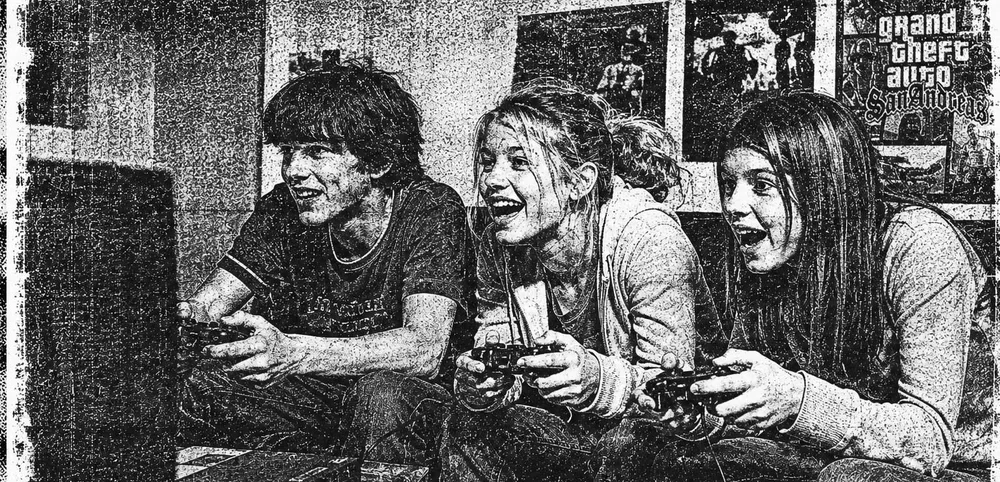
The short answer
There was a time when every generation had a soundtrack.
The Beatles.
Bowie.
Punk.
Hip Hop.
Acid house.
Britpop.
If you wanted to understand what young people cared about, you looked at the pop charts.
Music did not simply entertain.
It shaped identity.
Created tribes.
Determined how people dressed, where they gathered and, sometimes, how they understood the world.
Today, something has changed.
Music has not disappeared.
Films have not disappeared.
Television has not disappeared.
But increasingly, they are no longer where youth culture begins.
For millions of young people, culture happens somewhere else.
It happens inside games.
This is not another “gaming is bigger than Hollywood” argument.
We already know games are economically enormous.
That is not the interesting part.
Nor is this another article about what brands can learn from gaming.
The more important shift is cultural.
The games industry has grown to become one of the world’s most significant cultural institutions.
Not simply because it tells stories.
Because it creates the places where stories happen.
From products to places.
A record is a product.
A film is a product.
A novel, however brilliant, is something we enter for a while before putting it back on the shelf.
Games can be products too.
But the most influential games increasingly behave like places.
Persistent worlds where people:
- compete
- cooperate
- create
- socialise
- argue
- celebrate
- perform
- remember
The shift is not simply from old media to new media. It is from things we consume to places we inhabit.
Ask someone what they remember about a game such as Fortnite and they may not describe a level, menu or plot point.
They are more likely to say:
“Remember when…”
Remember when we pulled off that impossible win.
Remember when everyone logged in for the live event.
Remember when the map changed overnight.
Remember when our group played every evening that summer.
Those are not simply memories of media consumption.
They are cultural memories.
They matter because they were experienced together.
Culture has always needed somewhere to happen.
Human culture does not emerge in empty space.
It forms wherever people repeatedly gather.
The medieval marketplace was not merely somewhere to buy grain.
It was where news travelled.
Reputations formed.
Rumours spread.
Alliances were made.
Status was displayed.
The football terracing was not just somewhere to watch a match.
It generated songs, rituals, rivalries, fashions and a shared identity that existed long after the final whistle.
The nightclub (or warehouse etc) was not merely somewhere music was played.
It produced fashion, language, belonging and new ways of being together.
The record shop did the same.
So did the café.
The pub.
The dance hall.
The village square.
The metaverse mistook geography for culture.
It built the place before it invented the reasons to go there.
The new public square.
Today, millions of those encounters happen inside Discord servers, Roblox worlds, Minecraft realms and online games.
The games industry did not set out to replace the village square, football terrace or nightclub.
But in many respects, it has become their digital equivalent.
Not everywhere.
Not for everyone.
But for a generation growing up online, games increasingly function as social infrastructure rather than simply entertainment.
They are where friendships are maintained.
Where reputations are earned.
Where groups form.
Where rules are tested.
Where identity is performed.
Where people discover what sort of person they might become.
Music was participatory too.
It would be wrong to suggest that older cultural forms were entirely passive.
Punk was intensely participatory.
You saw The Clash on Friday night and formed a band the next morning.
Acid house produced DJs, promoters, pirate radio stations, flyers, warehouse parties and whole new forms of social organisation.
Football supporters create songs, language and rituals that clubs themselves could never manufacture.
Culture has always involved participation.
The difference is that games build participation into the medium itself.
Architects, not storytellers.
The games industry often compares itself with Hollywood.
It should be careful.
Film directors tell stories.
Game designers build environments.
The distinction is important.
An architect does not decide what conversations happen inside a café.
An urban planner does not script every encounter in a city square.
They create the conditions.
The spaces.
The routes.
The rules.
The incentives.
The possibilities.
People do the rest.
You are the main character.
The most successful game developers work in much the same way.
They do not merely write culture and transmit it to an audience.
They construct environments inside which culture can emerge.
In that sense, game designers increasingly resemble architects, hosts or urban planners more than film directors.
Their achievement is not simply what they make.
It is what becomes possible inside it.
Players create the culture.
Every inside joke.
Every ritual.
Every shared victory.
Every feud.
Every improvised game within the game.
Every piece of slang.
Every act of generosity or betrayal.
These add layers of meaning that no development team could fully script.
This is why successful game worlds often feel alive.
They are not merely authored.
They are inhabited.
A different kind of cultural power.
For much of the twentieth century, cultural power meant broadcasting something to millions of people.
A song.
A television programme.
A film.
A newspaper.
The producer made the thing.
The audience received it.
Games work differently.
Their cultural power comes from participation.
Culture becomes stronger when people do not simply witness it but help make it.
The audience becomes:
- performer
- collaborator
- competitor
- builder
- witness
- historian
That makes games unusually good at producing belonging.
You do not merely remember what happened.
You remember what you did.
Games understand status.
Human groups immediately produce status systems.
Who is skilled?
Who is generous?
Who is funny?
Who can be trusted?
Who knows the hidden rules?
Who has been there longest?
Who owns the rare object?
Who leads?
Games make these social dynamics visible.
Ranks.
Skins.
Achievements.
Roles.
Reputation.
None of these are trivial.
They are digital versions of ancient human concerns.
Belonging.
Prestige.
Reciprocity.
Coalition.
Identity.
The technology is new.
The social and psychological machinery is not.
Games are memory machines.
The most powerful cultural forms produce shared memory.
People remember where they were when they heard a record.
Who they were with at a concert.
What happened on a Tuesday night in November at Motherwell away..
Games now generate the same kind of memory.
Not merely:
“I played that game.”
But:
“We were there.”
That small word matters.
We.
Culture is rarely about the object alone.
It is about the people who gathered around it.
What happens when entertainment becomes infrastructure?
The games industry has spent years arguing that games deserve to be taken seriously as art.
That argument has largely been won.
The more interesting question is whether games have become something larger than art.
What happens when a medium becomes the place where millions of people learn:
- cooperation
- leadership
- reputation
- competition
- creativity
- negotiation
- identity
- belonging
What happens when a commercial entertainment product becomes part of the social environment?
That creates responsibilities as well as opportunities.
The rules of a game shape behaviour.
The reward systems shape status.
The architecture determines who meets whom.
The moderation system determines who feels safe enough to remain.
A game world may be fictional.
Its social consequences are not.
Infrastructure is never neutral.
A town square can welcome people or exclude them.
A road can connect communities or divide them.
A nightclub can create belonging or enforce hierarchy.
Digital worlds are no different.
Their design decisions shape the culture that grows inside them.
Who can speak?
Who gets rewarded?
What behaviour becomes visible?
What behaviour becomes normal?
Who owns what players create?
What happens when the servers close?
These are no longer simply product-design questions.
They are cultural questions.
Why this matters beyond games.
The most influential spaces of the twenty-first century may not be cinemas, concert halls or television studios.
They may be persistent digital worlds.
That matters for parents.
Educators.
Politicians.
Artists.
Researchers.
And for the games industry itself.
Because once you understand that you are building social infrastructure, success can no longer be measured only in downloads, subscriptions or hours played.
You are also shaping:
Communities.
Norms.
Memories.
Relationships.
And forms of identity that may last long after the game itself disappears.
Common mistakes
Treating games as films with buttons.
Games are not merely stories made interactive.
Their meaning often comes from what players do with one another.
Measuring culture through audience size alone.
A large audience is not necessarily a culture.
Culture appears through ritual, memory, participation and belonging.
Assuming participation is entirely new.
Punk, football and rave culture were participatory too.
Games differ because participation is embedded within the medium.
Believing developers control everything.
Developers create conditions.
Players frequently create the meaning.
Thinking virtual means unreal.
Digital spaces may be virtual.
The friendships, conflicts, status systems and memories created inside them are real.
The SignalWorks View
The twentieth century’s great cultural industries produced things.
Records.
Films.
Books.
TV shows.
The twenty-first century’s most influential industries increasingly produce places.
Worlds where people meet.
Compete.
Cooperate.
Perform.
Create.
Remember.
This is more than a technological change.
It is a shift in where culture lives.
The games industry is not simply competing with music, cinema or television for attention.
It is building the environments in which attention, identity and community now take shape.
That distinction may prove to be one of the defining cultural shifts of our age.
Key Takeaways
- Games increasingly function as persistent social spaces, not simply entertainment products.
- Cultural influence now comes as much from participation as from broadcasting.
- Game designers often behave more like architects or urban planners than traditional storytellers.
- Players create rituals, memories and meanings that developers cannot fully script.
- Digital worlds are becoming important forms of social and cultural infrastructure.
Frequently Asked Questions
Are games replacing music and film?
Not completely.
Music, film and television remain culturally important. But games increasingly provide the social spaces where identity, participation and shared memory are formed.
What does it mean to call games infrastructure?
It means games can function as environments in which people gather, communicate, form relationships and create culture, rather than simply as products they consume.
Is participation unique to gaming?
No.
Punk, rave culture, football and many other cultural forms were participatory. Games are distinctive because participation is built directly into the medium.
Why compare game designers with architects?
Because designers establish spaces, rules and possibilities. They cannot fully determine what people will do or what culture will emerge inside them.
Why does this matter for the games industry?
Because building social spaces creates responsibilities around community, moderation, incentives, safety, ownership and the long-term effects of design choices.
Further Reading
- Johan Huizinga — Homo Ludens
- Jane McGonigal — Reality Is Broken
- Sherry Turkle — writing on digital identity and online social life
- Henry Jenkins — Convergence Culture
- Christopher Alexander — A Pattern Language
- Guy Debord — The Society of the Spectacle
Related Knowledge
About The SignalWorks
At The SignalWorks, we study how culture, technology and human behaviour shape one another.
Because the important question is no longer simply what people watch, read or play.
It is:
Where do they now gather to become who they are?