
Knowledge Paper 024 · Retail Media
Why Almost Everything Is Becoming a Media Company
Retail media is not just another advertising channel. It is changing where buying decisions happen.
The short answer
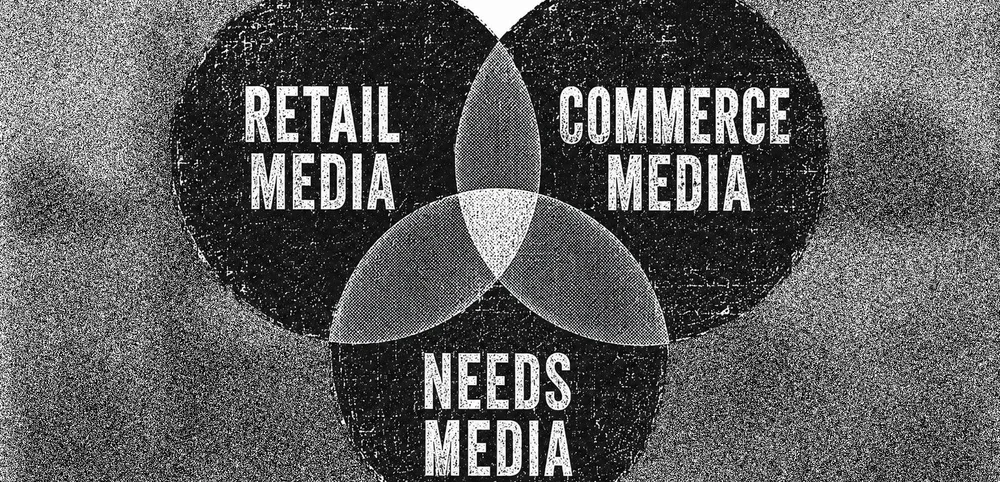
A Retail Media Network is what happens when a retailer becomes a media company.
Some people prefer to call it Commerce Media but for simplicities sake we'll just stick with 'Retail' (although 'Needs' Media - ©TheSignalWorks - is maybe a better catch-all).
The retailer does not only sell products.
It also sells brands access to its customers.
Tesco sells Heinz beans.
But Tesco can also sell Heinz advertising space:
On Tesco.com.
Inside the Tesco app.
In Clubcard emails.
On digital screens in stores.
In sponsored search results.
And across other websites using Tesco’s customer data.
Amazon does the same thing at enormous scale.
It is no longer simply a shop.
It is also one of the world’s most powerful advertising businesses.
Why retailers want to become media companies.
Retail is a difficult business.
Margins can be thin.
Stores are expensive.
Distribution is complicated.
Advertising is different.
Once the retailer already has the audience, the website, the app, the loyalty programme and the customer data, selling advertising can be highly attractive.
The retailer has something brands desperately want:
People who are already shopping.
Not people who might buy something next year.
People making decisions now.
That makes retail media valuable because it sits unusually close to the sale.
Google knows what you searched.
Meta knows what you liked.
Tesco knows what ended up in your kitchen.
That is a fundamentally different kind of information.
Search data reveals intention.
Social data reveals interests and associations.
Retail data reveals behaviour.
What people actually bought.
How often they bought it.
What they bought alongside it.
Whether they purchased on promotion.
Whether they switched brands.
Whether they buy premium products or cheaper alternatives.
Retailers do not need to sell a customer’s personal information to brands.
They sell the ability to reach groups of customers who behave in particular ways.
Retail media is not simply another channel.
It is tempting to place retail media on a list beside television, outdoor, social media and search.
That misses the important part.
Retail media represents a change in where advertising operates.
Traditional advertising mostly reaches people before they enter the market.
It builds memory.
Familiarity.
Recognition.
Mental availability.
Retail media reaches people when the buying situation is already active.
A person is no longer thinking:
“I might buy a bottle of whisky one day.”
They are thinking:
“Which bottle of whisky should I buy now?”
That is a very different moment.
From memory to decision.
Imagine someone shopping online for whisky.
They search for Glenlivet.
A competing brand might appear as:
- a sponsored search result
- a recommended alternative
- a personalised promotion
- a gifting suggestion
- a recipe or serving idea
- a product in a “customers also bought” section
The same campaign might continue inside the physical store through a digital screen near the spirits aisle.
The retailer owns the environment.
The retailer understands the shopping behaviour.
And the retailer increasingly controls which brands could become more visible at the decisive moment.
The connection to Category Entry Points.
Category Entry Points are the situations, needs and occasions that bring a category to mind.
“I need something for dinner.”
“I need a birthday gift.”
“We are having friends over.”
“I want something special for Christmas.”
“The car needs servicing.”
Brand building connects brands with these situations before the customer begins shopping.
Retail media enters later.
It operates around the final moment of truth, when a general need becomes an active purchase.
That makes retail media powerful.
But it also shows why it cannot replace brand building.
The customer still needs some reason to recognise, trust or consider the brand when it appears.
Brand building and retail media do different jobs.
RETAIL MEDIA HELPS CONVERT IT.
One helps the brand come to mind. The other helps the brand get chosen.
Advertising works hardest when it builds memory before purchase.
Retail media works hardest when someone is close to buying.
One helps the brand come to mind.
The other helps the brand get chosen.
You need both.
Without brand building, retail media can become expensive shelf shouting.
A collection of sponsored listings, discounts and prompts from brands the customer barely recognises.
Without retail media, brand advertising may create demand but fail to convert it at the point of choice.
These are not competing approaches.
They are complementary parts of the same system.
What Scottish producers should understand.
We're asking this specifically because of conversations we've had with producers up here, but it applies to regional or national brands anywhere. Retail media matters particularly for local producers because many still think about marketing through a fairly traditional set of activities.
PR.
Facebook.
Trade exhibitions.
Sampling.
Distributor relationships.
Retail listings.
These things still matter.
But they are no longer the whole commercial picture.
A retailer may now control not only whether your product is stocked, but also whether it is visible:
In search.
In recommendations.
In emails.
In the app.
On promotional screens.
Inside personalised offers.
Simply being listed does not guarantee you will be found.
The retail media opportunity for local brands.
Imagine the possibilities.
Walker’s Shortbread appearing prominently in Christmas gifting searches.
Mackie’s Ice Cream appearing beside summer desserts, strawberries and family barbecue shopping.
A Scottish salmon producer reaching customers who regularly buy healthy meal ingredients.
Isle of Harris Gin reaching people who buy premium spirits and high-value gifts.
A craft brewery appearing alongside barbecue food, football occasions or weekend entertaining.
A whisky brand reaching customers buying luxury food, glassware or gifts for Father’s Day.
These are not simply demographic audiences.
They are behavioural audiences.
People are being reached according to what they do, what they buy and what buying occasion they appear to be entering.
Small producers need to be careful.
Retail media presents an opportunity.
It also creates a new form of dependence.
Large brands can afford to compete aggressively for sponsored visibility.
Smaller producers may find that gaining a retail listing is no longer enough.
They may also be expected to pay for:
- search prominence
- promotional placement
- in-store visibility
- email inclusion
- retailer data
- campaign measurement
The risk is that the supermarket shelf becomes a pay-to-play media environment dominated by the deepest pockets.
That makes strategy essential.
A smaller brand can't buy everything.
It needs to identify the occasions, audiences and decision points where retail media is most likely to make a difference.
Don't buy audiences. Buy moments.
A producer should not begin by asking:
“Which retail media package should we buy?”
It should begin with:
Christmas gifting.
Weekend entertaining.
Premium self-treating.
A healthy midweek meal.
A barbecue.
A visit from friends.
A last-minute gift.
Then ask:
Where does that customer make the decision?
What are they searching for?
What else is in the basket?
Which retailer owns that moment?
That is a much smarter way to plan retail media than simply purchasing impressions.
The retailer already has the audience.
A customer buys:
Nappies.
Dog food.
Gluten-free products.
Hiking equipment.
Premium wine.
That creates a rich behavioural picture.
Perhaps they have a young family.
A dog. Nice people have dogs.
Specific dietary needs.
An interest in outdoor activity.
A willingness to buy premium products.
These are not certainties.
They are useful behavioural signals.
A brand doesn't need to know the customer’s name or inside leg measurement.
It wants the retailer to help it reach customers whose behaviour suggests the product may be relevant.
Retailers already possess the audience.
Retail media allows brands to rent access to it.
The bigger picture is coming.
Retail media will not stop with supermarkets.
The broader principle is more important:
That includes:
Pharmacies.
Petrol stations.
Airlines.
Hotels.
Banks.
Food-delivery platforms.
EV charging networks.
Travel-booking services.
Connected cars.
Home appliances.
The important asset is not the shelf.
It is the combination of behaviour, context and access to a decision.
The massive opportunity when the car becomes a media network.
People laughed when advertising began appearing on in-car screens.
They focused on the advert.
That was not the interesting part.
The interesting part was the car.
A connected car knows:
- the fuel level
- battery charge
- tyre pressure
- brake wear
- service history
- destination
- weather
- driving duration
- nearby retailers
That creates a series of commercially valuable moments.
Low fuel.
A service becoming due.
Three hours of continuous driving.
A depleted battery.
Worn tyres.
The screen is merely where the message appears.
The real innovation is that the product understands the context.
A connected car is no longer just a vehicle.
It can become a commerce media network.
From interruption to usefulness.
Advertising has traditionally interrupted people.
The TV show stops.
The article is broken up.
The poster interrupts the street.
The social feed is interrupted.
Retail media points towards another possibility.
Advertising arriving when it is genuinely contextually relevant.
You have been driving for three hours.
Here is a nearby coffee stop who'll also give you a free KitKat.
Your car needs new tyres.
Here is a fitting appointment.
You are planning a barbecue.
Here is a beer that fits the occasion.
You are buying a birthday gift.
Here is a premium Scottish product that can be delivered tomorrow.
Done badly, this becomes surveillance and irritation.
Done well, it becomes useful commercial information.
The distinction will matter enormously (which is why you need us - TheSignalWorks.)
Human beings value contextual information.
From an evolutionary perspective, information becomes more valuable when it helps solve an immediate problem.
A warning about distant danger is useful.
A warning about danger directly behind you is more urgent.
A general food recommendation may be interesting.
A food recommendation when you are hungry and choosing dinner is actionable.
Human attention is highly sensitive to current goals.
In fact, goal-directed behaviour is almost everything to advertising, but that's for another article....
Retail media works partly because it aligns the message with an active objective.
The person is already trying to solve a problem.
The advertising enters while that problem is a live one.
But relevance is not permission.
The fact that a company can use behavioural data does not automatically mean customers will welcome it.
There is a line between useful relevance and unsettling surveillance.
A recommendation based on what someone is currently shopping for may feel natural.
A message that reveals how much the retailer knows about their private life may feel intrusive.
The future of retail media will depend on:
Trust.
Transparency.
Data governance.
Frequency control.
And whether the customer receives genuine value in return.
Measurement is part of the appeal.
Retail media promises something traditional advertising often struggles to provide.
A clearer connection between exposure and purchase.
The retailer can potentially see:
- who was exposed
- what they bought
- whether they switched
- how the basket changed
- whether the sale happened online or in store
This makes retail media extremely attractive to brands under pressure to demonstrate commercial impact.
But measurement still needs care.
People exposed to retail advertising may already have been more likely to buy.
A sponsored listing may receive credit for demand created elsewhere.
A promotion may bring a purchase forward rather than create a new buyer.
Retail media improves the data.
It doesn't solve the problems of causation.
The retailer becomes more powerful.
Retail media is not only changing advertising.
It is changing the balance of power between producers and retailers.
The retailer controls:
- the customer relationship
- the shopping environment
- the purchase data
- the search results
- the recommendation system
- the point of sale
- the advertising inventory around all of them
For a producer, this creates access to extraordinarily valuable commercial moments.
But it also means the retailer may know more about the producer’s customers than the producer does.
That is the strategic issue beneath the media opportunity.
Common mistakes
Treating retail media as another display channel.
Its real value comes from customer behaviour and proximity to purchase, not simply from placing banners on a retailer’s website.
Using it as a replacement for brand building.
Retail media can influence the final decision, but it works better when the customer already knows and trusts the brand.
Buying generic impressions.
The strongest opportunities are usually specific buying occasions, searches and behavioural audiences.
Assuming a retail listing guarantees visibility.
Digital shelves are searchable, ranked, personalised and increasingly sponsored.
Believing all retailer data proves causation.
Better data improves measurement, but exposure and sales still need to be compared carefully.
Ignoring the retailer’s growing power.
The retailer is becoming the shop, the media owner, the data owner and the measurement provider at the same time.
Confusing relevance with permission.
Customers may value useful recommendations without accepting unlimited behavioural targeting.
TheSignalWorks View
Retail media is not simply changing where adverts appear.
It is changing who owns the customer relationship.
The most valuable advertising opportunity may no longer belong to the company with the biggest audience.
It may belong to the company that owns the decisive moment.
The supermarket search.
The pharmacy app.
The hotel booking.
The charging station.
The dashboard in the car.
For brands, the question is no longer only:
“How should we advertise?”
It is:
“Whose decisions are we trying to influence, and who owns those moments?”
The winners will not necessarily create the cleverest adverts.
They will understand where buying decisions happen.
And secure access before everyone else gets there.
Key Takeaways
- A Retail Media Network allows a retailer to sell advertising using its customer data and owned channels.
- Retail media reaches people unusually close to the point of purchase.
- Retailer purchase data can reveal behaviour that search and social data cannot.
- Brand building creates memory; retail media helps convert it.
- Brands should focus on specific buying occasions rather than generic retail-media inventory.
- Connected cars, banks, hotels, charging networks and other businesses will all become media owners.
- Retail media is changing both advertising and ownership of the customer relationship.
Frequently Asked Questions
What is a Retail Media Network?
A Retail Media Network is an advertising system operated by a retailer across channels such as its website, app, loyalty communications, physical stores and off-site media.
Why are retailers investing in media?
Retailers already possess customer attention, purchase data and commercial environments. Advertising allows them to generate additional revenue from those assets.
Is retail media only online?
No.
It can include sponsored search, websites, apps, email, loyalty programmes, digital in-store screens, promotions and off-site advertising informed by retailer data.
Is retail media the same as shopper marketing?
They overlap, but retail media is broader and more data-driven. It can connect retailer audiences across digital, physical and off-site environments.
Does retail media replace brand advertising?
No.
Brand advertising builds memory and familiarity before the purchase. Retail media is particularly powerful when the customer is already shopping.
Why should brands care?
Retail media can help smaller producers gain visibility during specific shopping occasions, reach behavioural audiences and compete more effectively at the point of choice.
What is the main risk for smaller brands?
Retail visibility may increasingly become too much Double Jeopardy, giving larger brands an advantage unless smaller producers choose their moments carefully.
What comes after supermarket retail media?
Any connected business that controls behavioural data and a decision point may develop a media network, including cars, banks, airlines, hotels, pharmacies and energy networks.
Further Reading
- Colin Lewis — writing and speaking on retail media networks
- Andrew Lipsman — writing and research on retail media
- Byron Sharp — How Brands Grow
- Jenni Romaniuk — Better Brand Health
- Jenni Romaniuk — Building Distinctive Brand Assets
- Mark Ritson — commentary on retail media and brand investment
Related Knowledge
About TheSignalWorks
At TheSignalWorks, we study where psychology, marketing science and technology meet.
Because retail media is not really a story about advertising space.
It is a story about who understands the customer, who controls the environment and who owns the moment when a decision becomes a sale.