
Knowledge Paper 018 · CONSUMER PSYCHOLOGY
What Are You Really Signalling?
Why customers are not just buying your product. They are saying something about themselves.
The short answer
People do not just buy products because of what those products do.
They buy them because of what those products say.
The car on the drive.
The coffee in the hand.
The trainers on the feet.
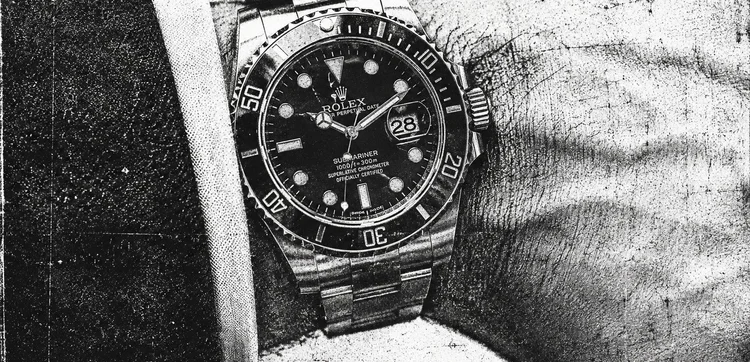
The watch under the cuff.
Even the software a business chooses.
Every purchase sends a signal.
We do not just communicate with words.
Evolutionary psychology has a useful idea.
Animals constantly send signals.
A peacock grows an enormous tail.
A stag grows oversized antlers.
Neither is especially practical.
That is the point.
They are costly signals.
They tell other animals something difficult to fake.
Humans do the same thing.
Only our props are different.
Not everyone wants to be seen.
One of the most interesting findings in luxury marketing is that wealthy people often prefer products with smaller logos.
Not bigger ones.
Someone buying their first luxury handbag may want everyone to know it is Gucci.
Someone buying their tenth may prefer that hardly anyone notices.
Because the signal is not aimed at everybody.
It is aimed at people who already understand.
The people in the club.
The people who can read the code.
Loud signals. Quiet signals.
Think about watches.
Some people want a huge gold Rolex.
Others wear a beautifully made watch that only another enthusiast would recognise.
Both are signalling.
They are just signalling to different people.
Both are signals. They are just aimed at different audiences.
The logo is not always the point.
Sometimes the mark needs to be obvious.
Sometimes it needs to be almost invisible.
A loud logo can help someone signal status to people who do not know much about the category.
A quiet cue can help someone signal taste to people who know a lot.
That is why some luxury goods shout.
And others whisper.
What this means for brands.
Most businesses think about branding as recognition.
Will people notice us?
Will people remember us?
Will people know it is us?
Those questions matter.
But there is another question:
That question changes everything.
The lesson for small businesses.
This is not just about luxury handbags and watches.
Small businesses signal too.
A law firm signals seriousness.
A restaurant signals taste.
An architect signals imagination.
An accountant signals control.
A marketing agency signals judgement.
The question is whether those signals are deliberate.
Or accidental.
Quiet can be powerful.
Many businesses think looking successful means shouting louder.
More awards.
More jargon.
More buzzwords.
More logos.
More claims.
Sometimes that works.
But sometimes the stronger signal is restraint.
Explaining something simply.
Charging properly.
Being selective.
Doing fewer things exceptionally well.
Quiet signals often carry more weight than loud ones.
Common mistakes
Assuming attention is the only signal.
Being noticed is useful.
But being understood by the right people is often more valuable.
Confusing loud with premium.
Loud branding can signal status.
But it can also signal insecurity.
Forgetting the audience.
A signal only works if the right people can read it.
Trying to impress everyone.
The strongest brands often know exactly who they are speaking to.
Copying luxury codes without understanding them.
Minimalism, restraint and scarcity only work when they are supported by real credibility.
TheSignalWorks View
Marketing is not just about getting attention.
It is about sending the right signal to the right people.
Sometimes that means standing out.
Sometimes it means showing restraint.
Sometimes the logo should shout.
Sometimes the detail should whisper.
The smartest brands understand the difference.
Because people do not buy brands simply because of what they are.
They buy them because of what they communicate.
Key Takeaways
- Products and brands send social signals.
- Loud signals are designed to be read by many people.
- Quiet signals are designed to be read by people in the know.
- Customers use brands to communicate identity, taste, status and belonging.
- The strategic question is not just what you sell, but what choosing you says about the buyer.
Frequently Asked Questions
What is signalling in marketing?
Signalling is the idea that products and brands communicate something about the person or organisation choosing them.
Why do some luxury brands use small logos?
Because some customers want to signal to a smaller group of knowledgeable people rather than to everyone.
Are loud logos bad?
No.
Loud logos can be useful when the buyer wants broad recognition. They are simply doing a different job.
Does signalling apply outside luxury?
Yes.
It applies to professional services, technology, restaurants, fashion, cars, agencies and almost every category where choices communicate identity or judgement.
What should small businesses learn from this?
Do not just ask how your brand looks.
Ask what it allows customers to say about themselves.
Further Reading
- Young Jee Han, Joseph C. Nunes and Xavier Drèze — Signaling Status with Luxury Goods: The Role of Brand Prominence
- Thorstein Veblen — The Theory of the Leisure Class
- Geoffrey Miller — Spent
- Robert Frank — Luxury Fever
- Byron Sharp — How Brands Grow
Related Knowledge
About TheSignalWorks
At TheSignalWorks, we help organisations understand what their brand is really communicating.
Because the question is not only:
What are you selling?
It is:
What are your customers saying about themselves when they choose you?