
Knowledge Paper 004 · Behavioural Science
What is the Hot–Cold Empathy Gap?
Why your customer is not the person who made the plan.
The short answer
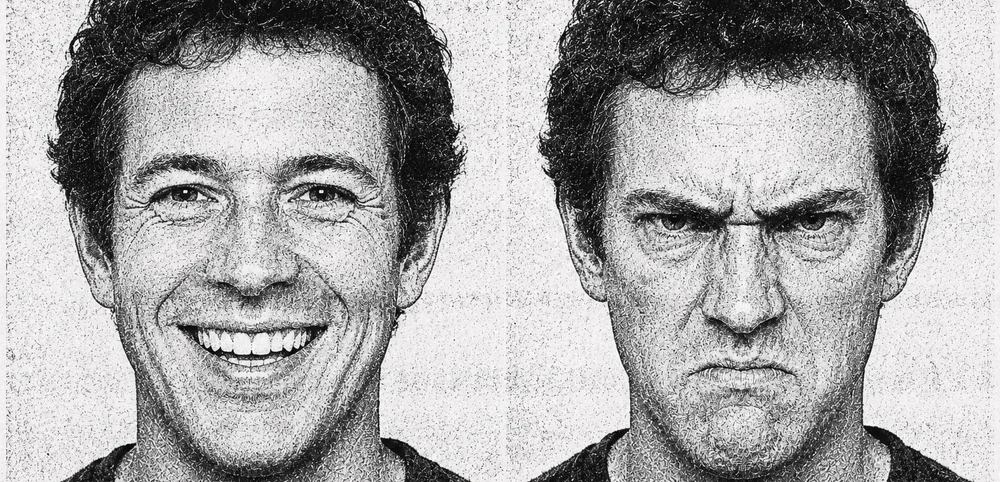
The Hot–Cold Empathy Gap describes our tendency to underestimate how differently we think and behave when we are in an emotional or highly motivated state compared with when we are calm and rational.
In simple terms:
That is why people buy things they never intended to.
Forget New Year’s resolutions.
Break budgets.
Eat the cake.
Book the expensive holiday.
Or leave a whisky shop carrying three bottles when they only planned to buy one.
Your future self is a stranger.
Imagine it is Monday morning.
You are organised.
Coffee in hand.
You tell yourself:
“I’ll only have one dram on Saturday.”
Saturday arrives.
Friends are round.
Dinner has gone well.
Someone opens a rare bottle.
The atmosphere changes.
Your decision changes too.
Nothing about your intelligence has altered.
Your state has.
That is the Hot–Cold Empathy Gap.
We make plans in the cold.
We make decisions in the heat.
Behavioural economist George Loewenstein first described this phenomenon to explain why people are surprisingly poor at predicting their own future behaviour.
When we are calm, rested and emotionally detached, we believe we will remain calm, rested and emotionally detached.
We will not.
Future decisions are influenced by:
- emotion
- stress
- excitement
- hunger
- alcohol
- social pressure
- fatigue
- desire
- scarcity
- celebration
These “hot” states fundamentally change how we evaluate choices.
Why this matters for marketing.
Many organisations assume customers buy logically.
Compare features.
Read specifications.
Evaluate price.
Then decide.
Sometimes they do.
Often they do not.
People frequently make purchasing decisions in emotionally charged environments.
- Duty-free departures.
- Christmas shopping.
- Birthday celebrations.
- Whisky festivals.
- Restaurant wine lists.
- Late-night online browsing.
These are hot states.
Marketing that ignores context misunderstands behaviour.
A whisky example
Imagine someone visits Speyside.
Before arriving they tell themselves:
“I’m only buying one bottle.”
Then they tour the distillery.
Meet the maker.
Taste directly from the cask.
Hear family stories.
Smell the warehouse.
Discover a distillery-only release.
Suddenly they are carrying three bottles back to the car.
The whisky did not change.
Their psychological state did.
Good marketers understand that.
Great marketers design for it.
We overestimate willpower.
The Hot–Cold Empathy Gap explains countless everyday behaviours.
- Why gym memberships are purchased enthusiastically.
- Why savings plans fail.
- Why diets collapse.
- Why subscriptions continue.
- Why impulse purchases happen.
We consistently overestimate the influence of rational intention and underestimate the influence of immediate emotion.
The environment makes the decision.
One of the most important implications is that behaviour is heavily shaped by context.
- A website.
- A shop.
- A tasting room.
- A queue.
- A recommendation.
- Limited availability.
- A countdown timer.
These do not merely communicate information.
They change psychological state.
The best marketers do not simply persuade.
They design environments where the desired decision becomes easier.
What this means for brands.
Rather than asking:
Ask:
Someone researching engineering software during office hours is in a very different state from someone buying a retirement whisky at an airport.
Different state.
Different psychology.
Different communication.
Common mistakes
Assuming customers are rational all the time.
They are not.
They are human.
Believing intention predicts behaviour.
Intentions matter.
Context often matters more.
Writing marketing for the cold state.
Many campaigns explain.
Few campaigns help people decide in the moment.
Ignoring emotion.
Emotion is not the opposite of rationality.
It is part of how humans make decisions.
How marketers can use the Hot–Cold Empathy Gap.
- Understand the emotional state surrounding purchase.
- Reduce friction.
- Increase confidence.
- Design memorable experiences.
- Remove unnecessary complexity.
- Use reminders.
- Use social proof.
- Make the preferred choice easier than the alternatives.
Marketing should not fight human psychology.
It should work with it.
The SignalWorks View
One of the biggest mistakes organisations make is believing customers behave exactly as they claim they will.
Usually they do not.
Not because they are irrational.
Because they are human.
Marketing succeeds when it understands people as they really are, not as spreadsheets assume them to be.
The question is not:
“What would our customer decide?”
It is:
“Who will our customer be when the moment arrives?”
Key Takeaways
- The Hot–Cold Empathy Gap explains why our behaviour changes with emotional state.
- People are poor at predicting how they will behave in future situations.
- Buying decisions are heavily influenced by context and emotion.
- Great marketing designs for real behaviour rather than ideal behaviour.
- Understanding psychological state is often more valuable than understanding demographics.
Frequently Asked Questions
Who developed the Hot–Cold Empathy Gap?
Behavioural economist George Loewenstein, whose research showed that people systematically underestimate the influence of emotion and motivation on future decisions.
Is the Hot–Cold Empathy Gap only relevant to impulse purchases?
No.
It affects financial decisions, healthcare, relationships, business strategy, addiction, negotiations and virtually every area where emotions influence judgement.
Can brands deliberately create hot states?
They already do.
Events, experiences, scarcity, social proof, storytelling and retail environments all influence emotional state.
The ethical question is how those tools are used.
How does this relate to marketing?
It reminds marketers that communication should be designed for the psychological state in which decisions are actually made, not the calm, rational state imagined in boardrooms.
Further Reading
- George Loewenstein — Hot–Cold Empathy Gaps and Medical Decision Making
- Daniel Kahneman — Thinking, Fast and Slow
- Richard Thaler & Cass Sunstein — Nudge
- Robert Cialdini — Influence
Related Knowledge
About The SignalWorks
Marketing often assumes customers behave consistently.
Behavioural science suggests otherwise.
At The SignalWorks, we use psychology to understand not only what customers think, but how they feel in the moments that matter.
Because behaviour is not simply shaped by information.
It is shaped by context.