
OPINION · ALCOBEV· Strategy
Moderation Isn't The Threat.
The occasion survives. The choice set evolves..
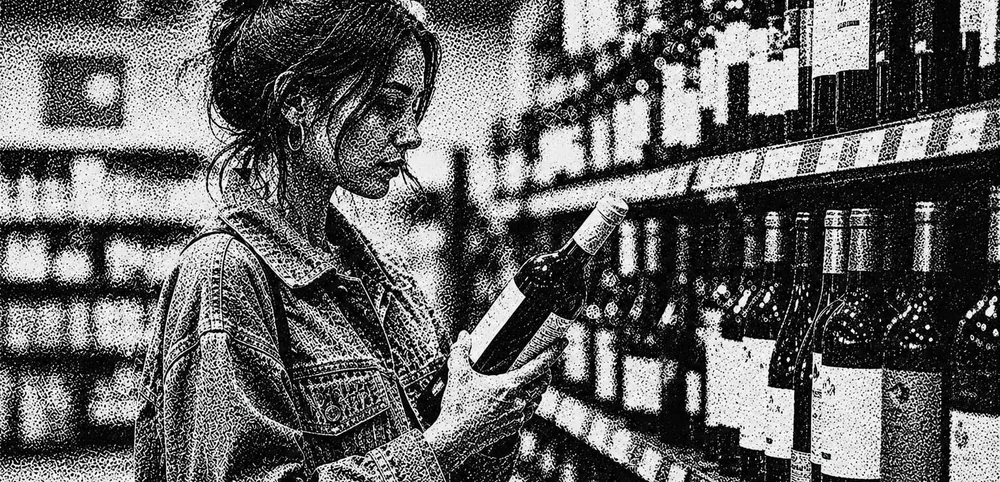
A WOMAN STANDS IN A SUPERMARKET AISLE on a Friday evening. In her basket is a bottle of sparkling water, two alcohol-free IPAs, a small rosé, and something in a can that claims to be a botanical cocktail. She is not having a crisis of moderation. She is not conducting a health audit. She is preparing for a barbecue tomorrow, and she has understood something that many drinks brands have not, it's the occasion that determines the basket, not the other way around. Of course she does. This is because she is not a persona. She is a person.
For the last few years, the drinks industry has been asking the same question: what happens now that people drink less? It is a reasonable concern. Alcohol consumption is changing. No- and low-alcohol products are growing. Younger consumers are drinking differently. Health is moving up the agenda and all that, but there is a danger in focusing too closely on what’s in the bottle.
Because people do not organise their lives around alcohol categories. They organise them around occasions.
The occasion determines the basket, not the other way around.
Not many people wake up thinking, “Today feels like a craft beer day.” They think, “We’re having friends over” or “I’m driving later” or “we’re celebrating cos Wendy got a promotion” or “TFI Friday.” The drink is simply recruited to fit the moment.
That’s why moderation isn’t the existential threat it’s often portrayed as. The occasions haven’t disappeared. They’ve diversified.
People still celebrate passing exams. They still host barbecues, they still meet friends after work, take bottles to dinner parties, buy gifts, watch the football, relax at the end of a long week and sit in airport lounges before a holiday. The reasons for gathering remain remarkably stable. What changes is the repertoire of drinks considered appropriate for each occasion.
A barbecue that once meant a case of lager might now include beer, alcohol-free beer, kombucha, sparkling water and canned RTDs. A weekday dinner that once defaulted to wine might now be shared between a glass of red and a premium alcohol-free alternative.
The occasion survives. The choice set evolves.
This really matters because too many brands define their competition too narrowly. Beer brands think they’re competing with other beer brands. Wine brands watch other wines. Spirits brands worry about rival distilleries. Consumers don’t see the world that way.
On a warm summer evening, a premium cider might compete with rosé. An alcohol-free IPA might compete with a sparkling botanical. A ready-to-drink cocktail might replace a bottle of prosecco. The real battleground isn’t the shelf. It’s the occasion.
The real battleground isn’t the shelf. It’s the occasion.
The strategic question therefore isn’t “How do we sell more whisky, tequila, gin or vodka?” It’s: “How do we become the brand people think of when one of these moments arrives?”
That shifts the conversation dramatically. Instead of chasing the latest category trend, brands start mapping the occasions that matter most. Which moments already belong to us? Which ones could we credibly enter? Which are growing? Which are underserved? And what distinctive role can we play within them?
These are far more useful questions than whether Gen Z drinks twelve per cent less than Millennials.
The strongest brands aren’t those with the longest list of product innovations. They’re the ones that come to mind in the moments that matter. Marketing science has shown repeatedly that buying decisions are driven by memory and associations. People rarely conduct a rational audit of every available option. More often, they reach for the brand that comes to mind when the situation presents itself.
I got this thrashed into me when working on Coca-Cola and consequently I want to pay it forward and thrash it into anyone who will listen.
That makes occasions incredibly valuable. Every barbecue, birthday, dinner party, festival, date night or second Tuesday of the month is another opportunity to strengthen those mental connections.
The brands that thrive in a moderation-led market won’t necessarily persuade people to drink more, but they’ll get more invitations. The drinks industry, with its obsession for loyalty programmes and CRM, has largely ignored this insight. Moderation makes it more urgent, not less.
Because moderation isn’t removing occasions from people’s lives. It’s changing what gets poured when they happen. And that’s a much bigger opportunity than many brands realise.
The woman in the supermarket aisle understood this before most marketing departments did. She wasn’t abandoning alcohol. She was expanding her drinks repertoire to match the expanded repertoire of her life and possibly waiting for a brand to notice that she exists.
The question for brands is not how to make her drink more. It is how to make sure that, among all those bottles and cans in her basket, at least one of them carries their name.
Cheers,Eaon